
HDR Project
Re-Architecting Platform-Embedded AI as Hybrid Intelligence: Complementarity and Alignment in Entrepreneurial Decision-Making
To develop and evaluate an empirically informed architecture for platform-embedded AI as hybrid intelligence.

1Research story
Research context & significance
Platform-embedded AI increasingly shapes entrepreneurial decisions, yet it is built within infrastructures that platform owners control and optimise for their own objectives. When entrepreneurial objectives are insufficiently represented, entrepreneurs face decision-level misalignment and respond by multi-homing or exiting, outcomes that serve neither party. The unresolved problem is how platform AI can be re-architected as hybrid intelligence so that human and machine intelligence contribute meaningfully under divergent stakeholder objectives.
Bridge platform diagnosis and hybrid intelligence design by distinguishing intelligence complementarity from stakeholder objective alignment. Develop an empirically grounded conceptual architecture + design principle for platform-embedded hybrid intelligence.
Research questions & objectives
- To develop and evaluate an empirically informed architecture for platform-embedded AI as hybrid intelligence.
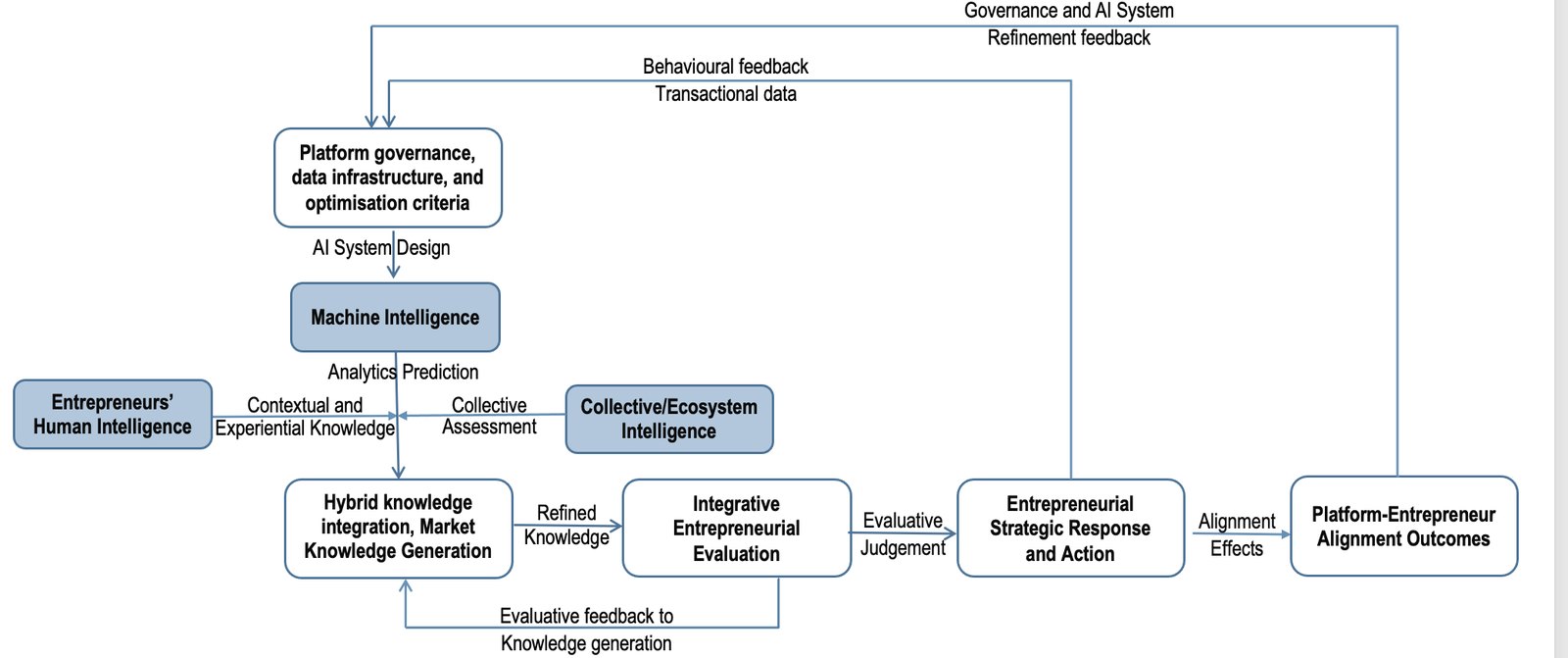
- To study how can human, collective and machine intelligence be configured within platform-embedded AI to support entrepreneurial decision-making and platform-entrepreneur alignment.
2Progress & key evidence
Progress since last update
- Scope defined across three literature streams: hybrid intelligence in sociotechnical system design; digital entrepreneurial decision in platform AI Age; and platform governance, algorithmic control and AI alignment.
- Gap mapped: platform diagnosis and hybrid intelligence design have developed separately.
Tangible outputs & evidence
- Literature review Draft + Gap
- Research training completed: Introduction to Qualitative Research and Data Analysis Course; academic writing workshop
Key result
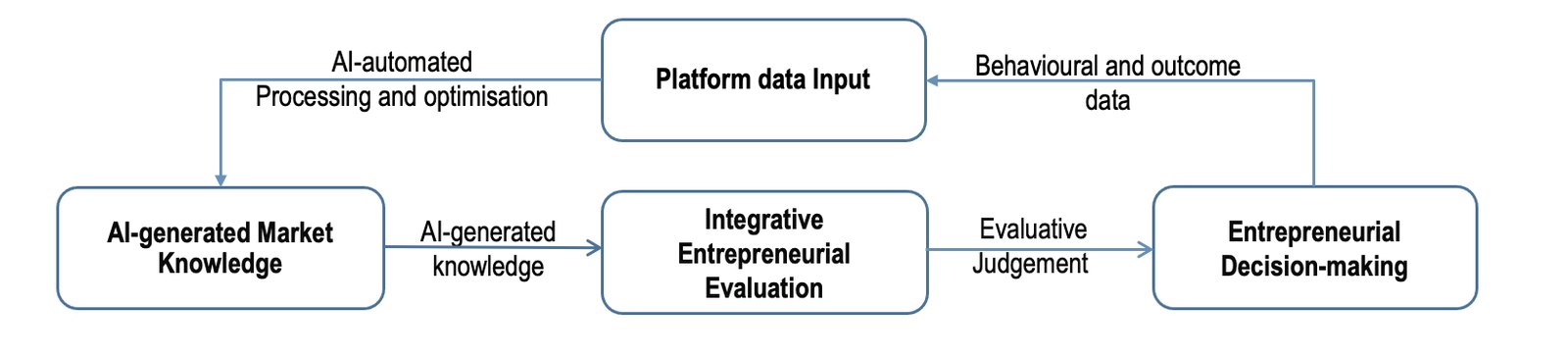
- Re-architect the platform loop: from AI steering with downstream human evaluation to hybrid intelligence supporting strategic complementarity and platform-entrepreneur alignment.
3Next steps, risks & support
Next steps
- 1
Discuss the proposed hybrid intelligence architecture and research topic with the principal supervisor
05 Oct 2026
- 2
Submit the refined literature review to the supervisor team, then submit to PELA
09/23 Oct 2026
- 3
Complete the research proposal draft for supervisor team review
30 Oct 2026
Success by next forum: Milestone-ready proposal
Risks & blockers
- Scope risk: the argument may spread too wide across hybrid intelligence design, entrepreneurial strategy, platform governance and ecosystem outcomes. Mitigation: bound the study to entrepreneurs’ decision domains and treat governance as context.
- Interdisciplinary research risk: sufficient technical depth may be required to support the proposed hybrid intelligence architecture and AI-application contribution. Mitigation: agree the level of instantiation with supervisor at the milestone.
Support needed
- Confirmation on three foundations before the proposal is drafted: whether the identified gap that platform diagnosis and hybrid intelligence design have developed separately holds against the current literature; whether the re-architecting scope is appropriate for a doctoral study; and whether Dellermann et al.’s hybrid intelligence is the right base model, or whether a more suitable framework exists in the AI and sociotechnical design literature.
Research team

Echo Zhang
HDR Candidate

Prof Alex Stojcevski
Principal Supervisor